01
Inspection first
Roof void, walls and subfloor checked to find how rodents are getting in.

Rats in Roof Removal in Melbourne means finding every entry point, clearing the animals and sealing the building so they cannot return. We handle scratching in the ceiling, droppings in the insulation and chewed wiring across Toorak, Brighton, Kew and Camberwell. If you are hearing noise above your bedroom tonight, contact us and we will book a same-day inspection.
Roof void, walls and subfloor checked to find how rodents are getting in.
You see what we found and the plan before any work starts.
Gaps proofed with steel mesh and sealant, not just bait.
Lockable, tamper-resistant stations placed with kids and pets in mind.
Rats in Roof Removal in Melbourne is the process of inspecting the roof void, identifying the species, removing the animals, sealing every entry point and decontaminating the mess they leave behind. It is not a bait block thrown into the manhole. We crawl the roof space with inspection mirrors and thermal imaging cameras, map the runs, and confirm whether you are dealing with roof rats, brown rats or mice before we treat anything.
Melbourne's older housing stock is the problem. Terracotta tiles, galvanised iron, weatherboard eaves and 1920s plumbing penetrations give rats dozens of ways in, and a cold, wet winter pushes them straight into the ceiling. If you have been searching how to get rats out of roof Melbourne homeowners can trust, the answer is proofing plus removal, not poison alone. We also cover rats in ceiling removal Melbourne wide, from single-storey cottages to three-level terraces.
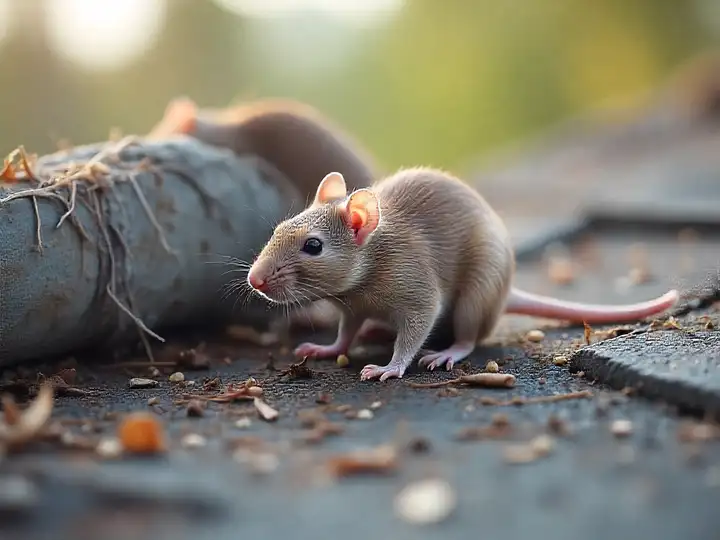
We enter the roof void through the manhole and work the full space with inspection mirrors and a thermal imaging camera. Expect 45 to 90 minutes on a standard Melbourne home. We photograph entry points, runs, droppings and nesting sites, and identify the species so the treatment matches the animal.
Depending on the situation we use snap traps, live catch traps or secured bait stations. Traps are set on the runs the rats are already using, not scattered randomly. We check and clear them on a fixed schedule, usually every two to three days until activity stops.
Once activity drops, we seal every entry point with steel wool, copper mesh, wire mesh and cement mortar. Roof-to-wall junctions, eaves, vent pipes and broken tiles all get attention. This is the step that separates a permanent fix from a repeat call-out in six months.
We remove droppings, contaminated insulation and any carcasses, then treat the void. If there is a dead rat smell, we locate the source rather than masking it. All waste is bagged and removed from site, and we can quote separately for full insulation replacement if the damage is extensive.
We return to verify the roof is clear and the proofing has held. You receive a written report with photos and a warranty on the workmanship. If activity returns within the warranty period, we come back and deal with it.
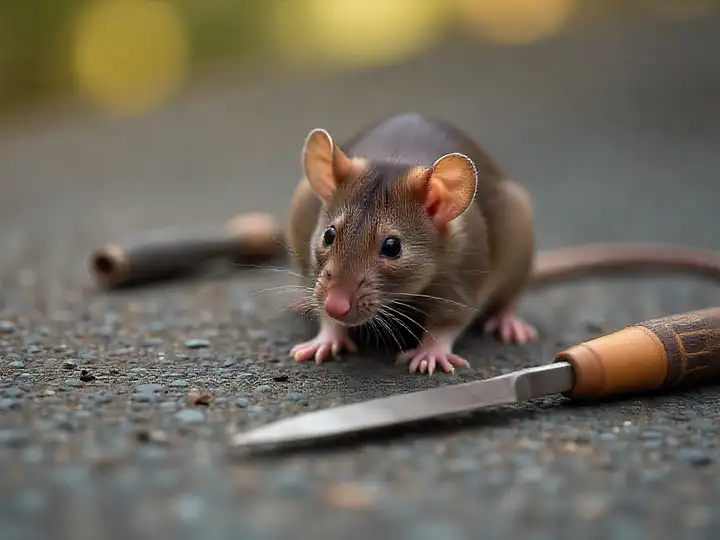
Used to find nesting sites, carcasses and warm-bodied animals behind insulation and inside wall cavities where a visual inspection cannot reach.
Let us see around corners, behind eaves and into tight roof junctions without pulling the ceiling apart. Essential on Melbourne's older homes with irregular roof framing.
Set on the runs rats are already using. Trapping clears a roof void quickly and avoids the dead rat smell that baiting in an enclosed space can cause.
Secured stations loaded with APVMA-approved rodenticide bait blocks. Used where trapping alone will not clear the population, and placed so children and pets cannot access them.
The core proofing materials. Rats chew through expanding foam and plastic, but they do not chew through copper mesh or steel wool packed tight into a gap.
Used to finish and weatherproof sealed entry points, particularly at roof-to-wall junctions, vent pipes and broken tile sections.
We combine inspection, exclusion, trapping and targeted baiting rather than relying on poison alone. IPM is why our roof jobs hold up over time, and it is the standard our technicians are certified to.
Every gap we find is photographed, recorded and sealed. A typical Melbourne roof has four to twelve usable entry points. Missing even one means the job is not finished, so we work systematically around the building.
Rats use the same routes night after night. We place traps on those runs rather than scattering them randomly, which is why we clear most roof voids in two to four visits instead of weeks.
We return after treatment to confirm activity has stopped and the proofing has held. You get a written report with photos, and the work is warrantied.
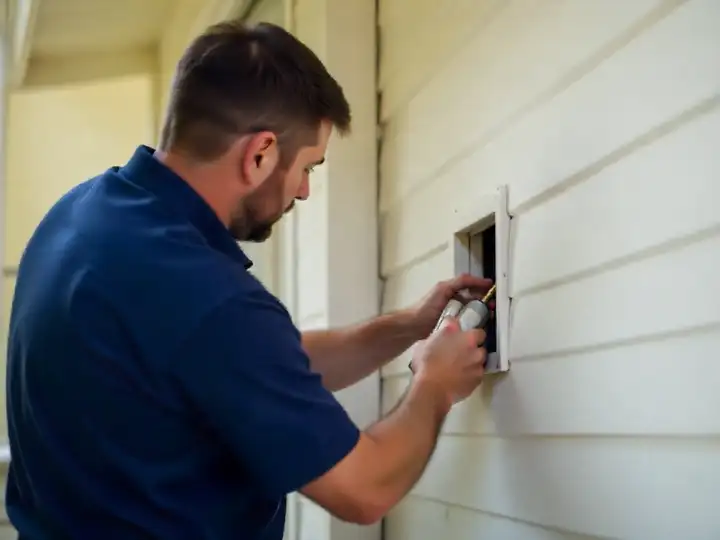
Night-time activity is the clearest sign of rats in the roof. We inspect the void, confirm the species and set traps on the runs. Proofing follows once activity drops. The noise stops, usually within one to two weeks, and the entry points are sealed so it does not restart next season.
We trace the route from the fence to the roof, identify the entry points and treat both the roof void and the access path. Bait stations are placed securely where pets and children cannot reach them. The population is cleared and the access route is blocked, so you are not dealing with the same problem again in three months.
We use thermal imaging and inspection mirrors to locate the carcass in the ceiling or wall cavity, remove it and treat the area. This is one of our most common after-hours call-outs. The smell is gone within 24 hours of removal, and we check for other carcasses while we are up there.
We carry out a full roof inspection, clear any activity, seal entry points and provide a written report with photos that you can pass to buyers, tenants or the agent. A documented clear roof with proofing in place, which is what buyers and property managers actually want to see.
A family in Hawthorn had been hearing scratching above the main bedroom for three weeks. The roof void had a nest in the insulation, droppings across two bays and four entry points along the eaves where the weatherboards had shrunk.
We cleared the nest, removed the contaminated insulation section, set traps on two runs and sealed all four entry points with copper mesh and mortar. Activity stopped within nine days and the follow-up inspection confirmed a clear roof.
Maintenance: Trim back the street tree branches that touch the roof line, and book an annual roof check before winter. Both take less than an hour and prevent most reinfestations.
A Brighton homeowner called after their electrician found gnawed cable insulation in the ceiling. There were six entry points around vent pipes and the roof-to-wall junction, and rats had been in the void long enough to leave heavy droppings throughout.
We trapped the population out over three visits, sealed all six entry points and removed the contaminated material. The electrician repaired the damaged cable once the roof was clear, and the follow-up report documented everything for the insurance claim.
Maintenance: Keep the vent pipe collars and roof-to-wall junctions on your annual inspection list. These are the first places to fail on rendered brick homes.
A Camberwell family had a dead rat smell in the hallway that had been building for a week. The carcass was in the ceiling cavity near a recently completed extension, and there was a second one in the wall cavity that nobody had found.
We located both carcasses with thermal imaging, removed them and treated the areas. We also sealed the openings left during the renovation, which were the original entry points. The smell cleared within 24 hours of removal.
Maintenance: If you are renovating, ask your builder to seal openings at the end of each stage. It takes minutes and saves a full removal job later.
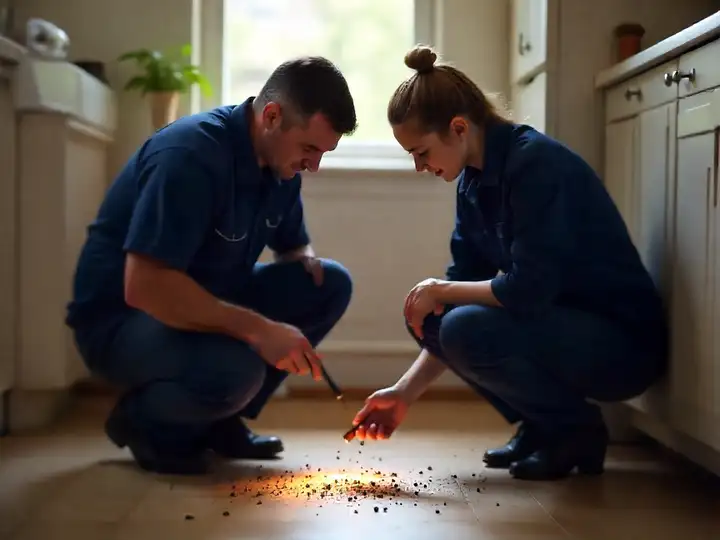
Our technicians hold licensed pest control technician credentials, public health licences, chemical handling certificates and Integrated Pest Management (IPM) certification. Everything we apply is Australian Pesticides and Veterinary Medicines Authority (APVMA) approved, and every job is run under Work Health and Safety (WHS) compliance. We work on Melbourne roofs every week, from Hawthorn weatherboards to Brighton rendered brick, so we know where these buildings leak animals and where they do not.
A straightforward single-storey removal with basic sealing sits at the lower end. Double-storey homes, tile roofs with multiple broken sections and heavy insulation contamination push it higher. We give you the figure before we start.
They climb. Rats use trees, fences, downpipes and power cables to reach the roof line, then squeeze through gaps as small as 20mm. Common entry points on Melbourne homes include broken terracotta tiles, gaps at the eaves, unsealed vent pipes, roof-to-wall junctions and worn weatherboard corners. Sealing these is the only permanent fix.
Yes, when it is done by a licensed technician using APVMA-approved products. We place bait stations and rodenticide where children and pets cannot reach them, and we tell you exactly what was used and where. Traps are set inside the roof void, not in living areas. If you have pets, let us know and we will adjust the placement.
Most jobs take two to four visits over one to two weeks. The first visit is inspection and trap setting, then we check every two to three days until activity stops. Proofing is usually completed on the second or third visit. If you are searching for roof rat extermination Melbourne near me and need it done faster, ask about our 24/7 roof rat removal Melbourne call-outs.
Not seeing your question? Our local team can help you understand urgency, scheduling and what to expect.
Ask the local team
General rat removal across the whole property, including subfloor, garage and garden. If rats are in the roof and also in the yard, we treat both at once so they do not simply relocate from one to the other.
View service
Mice often share the same roof void as rats, and they get through gaps rats cannot. We identify both species during the roof inspection and treat accordingly, because mice need smaller bait stations and finer mesh proofing.
View service
When rats move down from the roof into the wall cavities, the scratching follows you around the house. We trace the wall runs, remove the animals and seal the roof-to-wall junction that let them in.
View service
Tamper-resistant bait stations placed on runs and entry points, secured so children and pets cannot access them. We use APVMA-approved rodenticide bait blocks and check stations on a fixed schedule until activity stops.
View service
Send us the form and we will book you in, usually the same day for urgent rodent work.
Tell us what you are hearing or seeing and we will give you a straight answer on what the job involves and what it will cost. No obligation, no pressure.