01
Inspection first
Roof void, walls and subfloor checked to find how rodents are getting in.

If there is a dead rat in your wall or ceiling, the smell will not fade on its own. Our Dead Rat Removal in Melbourne service locates the carcass, removes it safely and deodorises the space, usually the same day you book. We work across Melbourne's inner and eastern suburbs, in weatherboard homes, brick veneers and period terraces where rats die in the hardest spots to reach.
Roof void, walls and subfloor checked to find how rodents are getting in.
You see what we found and the plan before any work starts.
Gaps proofed with steel mesh and sealant, not just bait.
Lockable, tamper-resistant stations placed with kids and pets in mind.
Dead Rat Removal in Melbourne is the physical recovery of a rodent carcass from a wall cavity, ceiling void, subfloor or roof space, followed by treatment of the area to kill odour, bacteria and the insects that follow. We use inspection mirrors and thermal imaging cameras to pinpoint the body without pulling your house apart, then remove it with long-reach tools, bag it, and treat the cavity with an APVMA approved sanitiser. Most jobs take two to four hours.
Melbourne homes give rats plenty of places to die out of reach. Weatherboard walls in Hawthorn and Camberwell, suspended timber floors in South Yarra, and 1970s brick veneer in Balwyn all have cavities that hold a carcass for weeks. Warm November weather speeds up decomposition, so the smell arrives faster and lingers longer. If you have found dead rodent removal Melbourne services before and the smell came back, the carcass was likely missed or a second one is nearby.
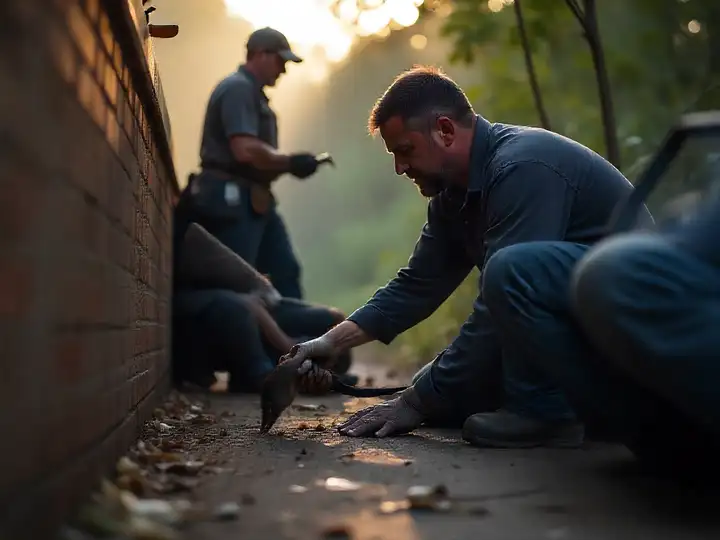
We ask where the smell is strongest, when it started and what you have heard in the ceiling. That tells us whether the carcass is in a wall, a ceiling void or a subfloor before we arrive. You get a clear price before any work starts, not a surprise invoice later.
A licensed pest control technician inspects the roof space, wall cavities and subfloor with inspection mirrors and a thermal imaging camera. The camera shows the cooler mass of a decomposing body through plaster and timber. This step usually takes 20 to 40 minutes.
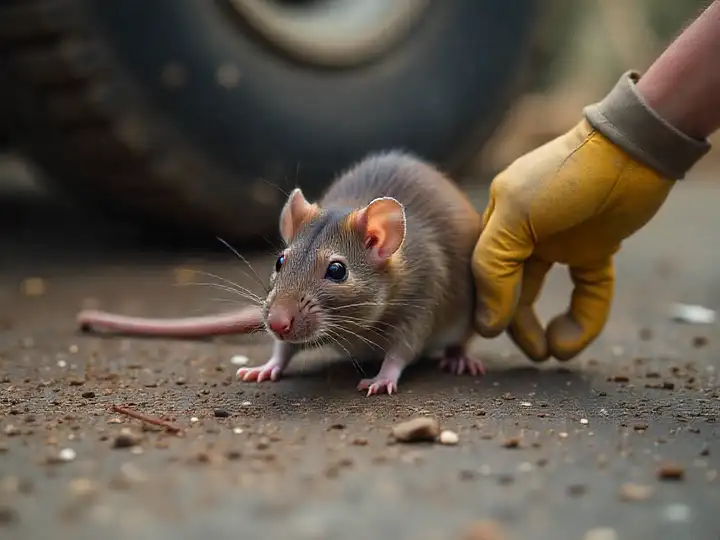
We retrieve the carcass using long-reach grabbers, seal it in heavy-duty bags and remove it from the property. Where access is tight we make one small cut, remove the body, and patch the opening before we leave. You never handle the carcass yourself.
The cavity and surrounding surfaces are treated with an APVMA approved sanitiser and odour neutraliser. We also remove droppings, nesting material and any dead insects in the same void. This is the step that stops the smell returning and kills the bacteria left behind.
We identify how the rat got in, seal the entry points with steel wool, copper mesh and expanding foam, and set bait stations or snap traps where activity is ongoing. You receive a short written summary of what we found, what we removed and what we sealed.
Used to locate a decomposing carcass through plaster, timber and brick by detecting the temperature difference between the body and the surrounding structure. This is what keeps the job to one access point.
Long-handled mirrors let us see into wall cavities, subfloors and roof voids without cutting. We confirm the carcass location visually before any access work begins.
Used to retrieve the carcass from cavities where a hand cannot reach. The rat goes straight into a sealed bag without being dragged through your home.
Set where live rodent activity remains after the carcass is removed. Snap traps give a visible carcass you can remove, while live catch traps suit homes where poison is not an option.
Tamper-resistant stations from Bell Laboratories and Contrac hold rodenticide bait blocks safely away from pets and children. We place and monitor them where rats are still moving.
Packed into gaps around pipes, vents and roof lines to block rodent entry. Rats cannot chew through copper mesh, which is why we use it over foam alone in high-traffic entry points.
Used to close larger gaps and seal around the mesh once it is in place. This is the final step that makes the proofing last through Melbourne's temperature swings.
We treat the cause, not just the symptom. That means removing the carcass, cleaning the contamination, sealing the entry points and monitoring for live activity, rather than spraying and leaving. IPM is why our jobs do not come back.
Every sanitiser and rodenticide we use is approved by the Australian Pesticides and Veterinary Medicines Authority and applied to label specification. That protects your family, your pets and the technician handling the product.
We scan the suspected area with a thermal imaging camera before cutting anything. The camera shows the carcass as a distinct cool mass, which lets us plan a single access point rather than opening up a wall to search.
Carcass handling, bagging and disposal follow WHS requirements, including PPE for the technician and sealed transport. You are not left holding a bag with a decomposing rodent in it.
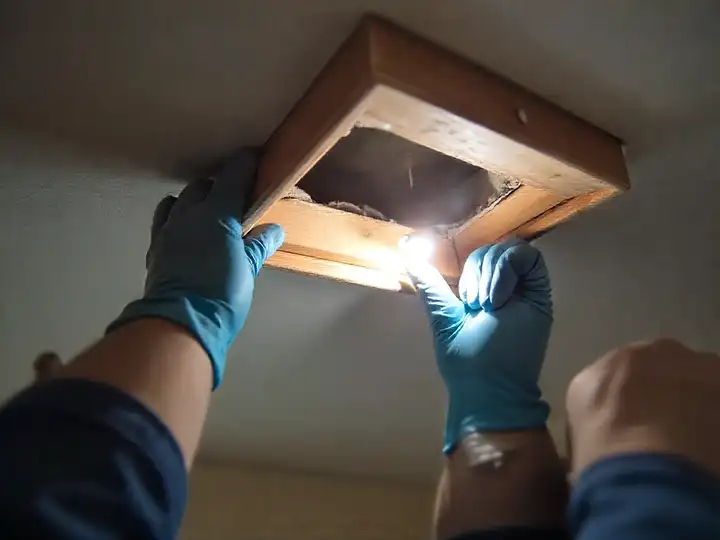
We inspect the wall cavities either side of the smell with a thermal imaging camera and inspection mirrors. The carcass is located, removed through a single small cut, and the cavity is treated and deodorised. The smell clears within a day and the wall is patched before we leave. No exploratory holes, no renovation.
We treat commercial jobs as priority work and can attend before trading hours. The carcass is located and removed, the area is sanitised to food-premises standards, and entry points behind the shelving are sealed. The storeroom is usable the same day and the proofing stops rodents returning through the same gap.
We attend, remove the carcass, treat the void and provide a written summary of the work. Entry points in the roof are sealed with steel wool and copper mesh to prevent a repeat. The tenant issue is resolved, the landlord has documentation for the file, and the property is proofed against the next incursion.
We re-inspect the full roof space and wall cavities rather than just the original spot. In most repeat cases there is a second carcass nearby or the first cavity was never treated with a neutraliser. The missed carcass is removed, the cavity is properly treated, and the smell does not return.
A homeowner in Hawthorn had a strong smell in the hallway for nine days. Two previous pest companies had sprayed deodoriser into the wall cavity without removing anything. The smell was getting worse and flies had started appearing in the kitchen.
We located the carcass in the wall cavity with a thermal imaging camera in under 30 minutes, removed it through a single small cut, treated the cavity with an APVMA approved neutraliser and patched the opening. The smell dropped within 24 hours and was gone by day three.
Maintenance: We sealed two entry points under the house with copper mesh and expanding foam. The homeowner checks the roof space once a year and has had no repeat issue.
A property manager in South Yarra reported a dead rodent smell in a ground-floor unit. A previous contractor had removed one carcass from the ceiling but the smell persisted. Tenants were threatening to break the lease.
Our inspection found a second carcass in the subfloor that had been missed. We removed it, treated the subfloor and the ceiling void, and sanitised the insulation around both locations. The smell cleared within two days and the tenants stayed.
Maintenance: We set bait stations in the subfloor and sealed the entry gap behind the laundry. The property manager now books a six-monthly check across all units in the block.
A Balwyn family noticed scratching in the ceiling that stopped suddenly, followed by a smell in the main bedroom. The ceiling insulation had been soiled by droppings and the carcass was decomposing into the batts.
We removed the carcass, cut out and replaced the contaminated insulation section, treated the void with sanitiser and sealed three roof entry points with steel wool and copper mesh. The bedroom was usable again within 48 hours.
Maintenance: Snap traps were set in the roof space for two weeks and checked twice. No further activity was recorded, and the family now books an annual roof inspection before winter.
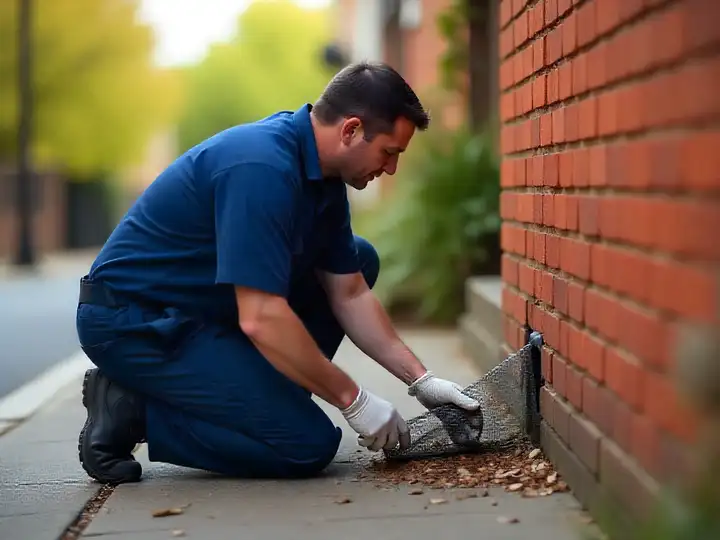
Our technicians hold public health licences and chemical handling certificates, and every job is run to Integrated Pest Management (IPM) principles rather than a spray-and-hope approach. We work with products from Bell Laboratories, Contrac and Ditrac, and we know which bait blocks perform in Melbourne's climate and which do not. We have removed carcasses from double-brick walls in Toorak, suspended floors in Middle Park and roof voids in Ivanhoe East. That local experience matters, because a rat that dies in a Melbourne wall cavity in November behaves differently to one that dies in a roof space in July.
A rat in an accessible roof space sits at the lower end. One sealed inside a double-brick wall cavity, needing a cut and patch, sits higher. Deodorising and proofing are included in that range.
You cannot neutralise the smell while the carcass is still in the cavity, so removal comes first. Once the body is out, we treat the void with an APVMA approved sanitiser and odour neutraliser. The smell usually drops within 24 hours and is gone within three days. Air fresheners and coffee grounds only mask it temporarily.
Handling a carcass without protection is risky. Decomposing rodents carry bacteria and attract flies and beetles that spread contamination. We remove the body in sealed bags, treat the surrounding surfaces and dispose of everything under Work Health and Safety (WHS) compliance. You should not touch the carcass or the nesting material around it.
In most cases, yes. We use thermal imaging cameras and inspection mirrors to pinpoint the carcass, then remove it through an existing access hatch, vent or a single small cut. We patch that opening before we leave. Full wall removal is rare and only happens when the carcass is behind tiles or a fixed cabinet.
Not seeing your question? Our local team can help you understand urgency, scheduling and what to expect.
Ask the local team
Removing the dead rat is only half the job. Our rat removal service traps and clears the live rodents still moving through your roof and walls, so you are not booking another carcass removal in a month.
View service
Mice die in the same cavities rats do, and the smell is just as bad. Our mice control service covers baiting, trapping and proofing for the smaller rodents that get into Melbourne kitchens and wall linings.
View service
Most dead rats we recover come from roof spaces. Our rats in roof removal service clears the animals, removes droppings and nesting material, and seals the roof entry points they used to get in.
View service
Wall cavities are the hardest place to reach a carcass. Our rats in walls removal service uses thermal imaging and inspection mirrors to locate and extract rodents with minimal cutting and a proper patch afterwards.
View service
Send us the form and we will book you in, usually the same day for urgent rodent work.
Tell us what you are hearing or seeing and we will give you a straight answer on what the job involves and what it will cost. No obligation, no pressure.